


Mazda Axela Common Problems in Kenya and How to Fix Them
Mazda Axela common problems explained by Nairobi Mazda specialists: i-stop faults, diesel soot, parking brake drag, hybrid issues, suspension and more.
The temperature needle climbing in a Nairobi jam is one of the most stressful moments for any driver. Understanding the main car overheating causes helps you react correctly in the moment, and can save your engine from damage that costs far more than the original fault.
This guide explains why engines overheat, the warning signs, what to do at the roadside, and the specific issues we see on Honda and Mazda cars in Kenya.
Your engine makes enormous heat. The cooling system keeps it within a narrow operating range using these parts:
When any one of these fails, heat builds faster than the system can remove it, and the engine overheats.
Catch these early and the fix is usually a hose, a cap or a thermostat. Ignore them and you risk the cylinder head.
This is the number one cause we see. Coolant escapes through cracked hoses, loose clamps, a leaking radiator, the water pump seal or the heater core. Topping up with water hides the problem and dilutes the corrosion protection. Find and fix the leak.
If the thermostat sticks closed, coolant cannot reach the radiator and the engine heats up quickly, often within minutes. A thermostat stuck open causes the opposite: the engine runs cold, uses more fuel and the heater works poorly.
A car that stays cool on the highway but overheats in traffic often has a fan problem. The cause could be the fan motor, a relay, a fuse, the coolant temperature sensor or the wiring. These faults show up with proper diagnostics.
Dust, insects and mud clog the fins from outside. Old or mixed coolant leaves scale inside. Either way, the radiator cannot shed heat. The AC condenser sits in front of the radiator, so a clogged condenser also restricts airflow. That is why overheating and weak car AC often appear together.
A worn water pump may leak from its weep hole, make a grinding noise or simply stop moving enough coolant. On engines where a belt drives the pump, a slipping or broken belt has the same effect.
The cap is cheap but important. If its seal fails, the system loses pressure, the coolant boils at a lower temperature and it escapes as steam.
After coolant work, air pockets can collect around the thermostat or the cylinder head. The engine can then overheat even with a full radiator. Bleeding the system correctly is part of any proper cooling repair.
This is the result most owners fear. Severe overheating can warp the cylinder head and blow the head gasket. The signs are white exhaust smoke with a sweet smell, milky oil, bubbles in the expansion tank, or coolant disappearing with no visible leak. A pressure test and a combustion gas test will confirm it.
Some cooling systems cope with Nairobi traffic but struggle on upcountry trips. Long climbs, like the escarpment on the way to Naivasha, load the engine heavily at low speed for many minutes. A full car, roof luggage and AC running all add to that load.
If your gauge creeps up on climbs, try these steps:
A car that overheats only on climbs is giving you an early warning. A partly blocked radiator, a weak fan or a tired thermostat often shows up here first, long before it causes trouble in town.
At our workshop we do not start by replacing parts. A proper diagnosis includes:
Then we explain what we found, show you the failed part where possible, and quote before any repair.
No, not if you can avoid it. Driving with the gauge in the red can warp the cylinder head and damage the head gasket within minutes. Pull over, switch off, let the engine cool, and arrange for the car to be checked or towed.
In a roadside emergency, water will get you to a garage. Long term, it is harmful. Water boils at a lower temperature than a proper coolant mix, gives no corrosion protection, and can leave scale in the radiator and engine. Flush and refill with the correct coolant soon afterwards.
At speed, air flows through the radiator naturally. In traffic, the electric fans must pull that air through. If the car stays cool on the highway but overheats in jams, suspect the radiator fans, their relay or sensor, or a clogged radiator and condenser.
Coolant can leak onto hot parts and evaporate before it drips, so a small external leak may not leave a puddle. It can also leak internally, through a failing head gasket, into the combustion chamber. A pressure test and a combustion gas test will show which it is.
A thermostat stuck closed makes the engine overheat quickly, often while the top radiator hose stays cool. One stuck open makes the engine take a long time to warm up, with weak cabin heat and higher fuel use. Live temperature data from a scan tool confirms it.
Coolant comes in green, pink, blue and other colours depending on the brand and chemistry. Colour alone does not tell you whether two coolants are compatible. Always check your manual or ask your garage before adding any coolant.
The engine and the hybrid battery have separate cooling systems. An overheating engine does not directly overheat the battery. However, hybrids rely on both systems, so any temperature warning on a hybrid should be checked by a technician who knows hybrid systems.
Most car overheating causes start small: a weeping hose, a tired thermostat, a failing fan relay or old coolant. Dealt with early, each is a modest repair. Ignored, they can lead to a warped cylinder head and a far bigger bill.
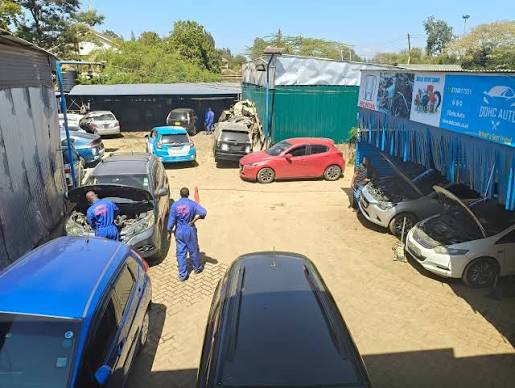
If your Honda or Mazda is running hot, stop driving it hard and get it checked. Call 0708 817 551 or 0741 206 350, or contact DOHC Auto on Mirema Lane, behind PAC University. We will find the real cause before we replace anything.
Mazda Axela common problems explained by Nairobi Mazda specialists: i-stop faults, diesel soot, parking brake drag, hybrid issues, suspension and more.
Honda Fit vs Mazda Demio: a Nairobi Honda and Mazda garage compares space, engines, gearboxes, running costs and parts so you can buy the right car.
Learn the most common car overheating causes, what to do the moment your temperature light comes on, and how to protect your Honda or Mazda engine.

It is a long established fact that a reader will be distracted by the readable content of a page when looking at its layout.
